

5 ways to speed up delivery of your telecoms project
16 June 2026Dalcour Maclaren’s Nick Summers and Alex Tsentides discuss the challenges telecoms projects often face - and explain how the right mix of land, planning, geomatics and stakeholder expertise can keep projects moving, reduce delays and remove risk before it escalates.
In this article:
The race to deliver digital infrastructure across the UK and Ireland has never been more urgent. From securing land for new mobile sites to submitting planning applications that achieve consent, telecoms operators are under pressure to move quickly without compromising compliance, stakeholder relationships or delivery certainty.
However, although ambition is high, there are familiar challenges that threaten to derail telecoms projects. In our experience, telecoms delays rarely stem from a single major failure. More often, it is an incremental build-up of avoidable issues, including:
- Incomplete or inconsistent data
- Misaligned teams and disconnected delivery partners
- Planning applications that fail to address local sensitivities
- Land or access issues discovered too late
- Stakeholder concerns that escalate because nobody owns the relationship
The challenge for operators is that many of these issues are interconnected. When planning, acquisition, geomatics and stakeholder engagement are handled separately, information gets lost, decisions become fragmented, and delays start to build.
Speed in telecoms and digital infrastructure projects isn’t about moving faster. It’s about removing the barriers that slow you down.

The impact of the ECC
The impact of the revised Electronic Communications Code (ECC), introduced through the Digital Economy Act 2017, on network deployment and landowner relations is well established. While it has supported infrastructure rollout, it has also reshaped valuation and negotiation dynamics, leading to more cautious engagement and more formalised negotiations on both sides.
“The solution is not simply to move faster. It is to remove friction from the process altogether by engaging early, bringing the right expertise together, sharing reliable information across teams and solving problems before they become programme risks.”

That means telecoms projects now rely on more than just technical delivery. They require experienced land and stakeholder specialists who understand how to navigate sensitive conversations, manage expectations and keep negotiations moving forward.
Without that expertise, projects can stall before the design or planning work even begins.
Common causes of telecoms delays
Every telecoms project is different, but the same delivery issues appear repeatedly.
Incomplete or inconsistent data
Incomplete or poor-quality site data is a frequent cause of telecoms project delays. Inaccurate surveys, missing ownership information and unidentified site constraints often only become apparent later in the programme, leading to redesigns, repeat visits and avoidable delays as issues are addressed reactively.
Fragmented project teams
Effective delivery of telecoms infrastructure relies on coordinated input across multiple disciplines, including planning, acquisition, geomatics and stakeholder engagement. However, this can become an obstacle if project teams are fragmented or the use of third-party partners prevents the consistent flow of information or a coherent and well-managed process.
Planning applications that fail under scrutiny
Even strong sites can fail to secure consent if planning submissions do not properly address local concerns, environmental sensitivities or visual impact.
Land and access issues that are discovered too late
Projects regularly encounter delays when ownership complexities, access rights or consent requirements emerge after design work has already progressed. Coordination and consistency are key. You need to be right the first time, with no surprises.
Poor stakeholder engagement
Landowners, local authorities and communities all influence delivery. When communication is inconsistent or reactive, resistance can grow and projects lose momentum.
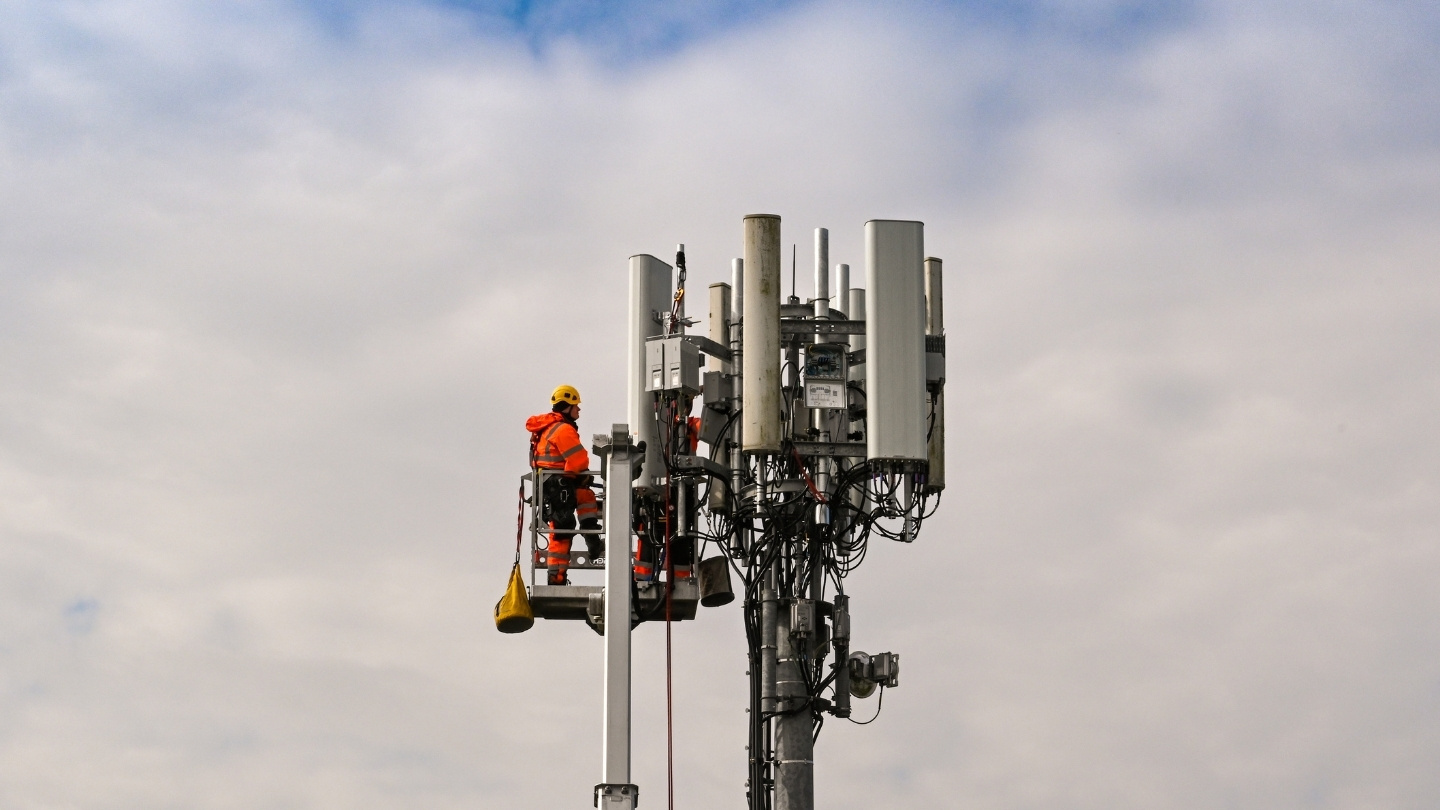
5 ways to accelerate telecoms project delivery
What these telecoms project challenges have in common is that they are rarely inevitable. More often than not, there are several straightforward, practical steps telecoms operators and their partners can take that make a significant difference to delivery.
1. Build trusted relationships to keep projects moving
Telecoms projects succeed or fail on relationships.
Whether negotiating with landowners, managing local authority concerns or coordinating contractors on site, delivery depends on trust, communication and having the right people to manage sensitive conversations from the outset.
At DM, we have extensive experience working with landowners across major UK infrastructure programmes, including rail, renewable energy and electricity distribution. This has given us a strong understanding of the complexities involved in securing and managing land access across varied environments.
Our focus is on applying this experience to support effective engagement strategies, helping to navigate land access processes and address issues as they arise.
And importantly, our role continues beyond initial access arrangements. We remain actively involved throughout delivery, providing a consistent point of coordination between contractors, landowners and wider project stakeholders to support the smooth and efficient progression of works.
“The real value comes when clients know someone is there to sort problems before they become delays.”
If issues arise on site, from access disputes to contractor concerns, we help resolve them quickly before they escalate into programme delays.
That continuity matters. Operators need more than a supplier that can secure land or submit paperwork. They need a partner who can relieve pressure, proactively manage issues and keep projects progressing. The real value comes when clients know someone is there to sort problems before they become delays.
2. Use geomatics to eliminate incomplete and inconsistent data
Incomplete or inconsistent data is one of the biggest causes of telecoms project delays.
When survey information is inaccurate, outdated or fragmented across suppliers, projects quickly run into redesigns, planning challenges and unexpected site constraints.
That is why robust geomatics capability is critical.
At DM, our Geomatics specialists combine surveying, GIS, CAD, land referencing and spatial analysis to build a reliable understanding of a site before key decisions are made.
That includes:
- Identifying physical and environmental constraints early
- Verifying land ownership and access requirements
- Producing accurate survey and mapping data
- Supporting desktop assessments and remote analysis
- Providing joined-up information that all project teams can work from
Land referencing is vital in complex infrastructure projects. Establishing exactly who owns land, who has rights over it and who needs to be consulted is often far more complicated than expected, particularly in rural or fragmented ownership areas.
By resolving those issues early, projects avoid late-stage surprises that can force redesigns, delay planning, disrupt delivery and make projects more expensive.
Recent restrictions on drone usage near residential areas have increased the importance of high-quality desktop assessments and remote geomatics capabilities. Strong data upfront reduces risk later.
3. Replace fragmented suppliers with one coordinated delivery team
One of the biggest frustrations for telecoms operators is managing multiple disconnected consultants across the project. Different teams work to different timelines, information is not always shared properly, and decisions made in one area can create problems elsewhere.
That fragmentation slows projects down.
The advantage of working with a multidisciplinary delivery partner is that everything is coordinated from the outset. That means:
- Faster communication between disciplines
- Consistent project data across teams
- Earlier visibility of risks and constraints
- Fewer delays caused by third-party coordination
- Faster access to specialist expertise when requirements change
Instead of operators managing multiple suppliers separately, you have a single delivery partner who coordinates the process and resolves issues collaboratively. For example, if you need an environmental assessment, heritage input or additional survey work, we bring in specialists immediately without disrupting programme momentum.
4. Solve acquisition and access problems before they stall delivery
Misalignment between design, acquisition and land access is a common cause of delays in telecoms deployment.
Too often, design activity progresses before land ownership, access rights and site constraints have been fully understood. This can lead to avoidable issues emerging later in the programme, requiring rework, redesign or delays while the constraints are resolved.
That is where early engagement with experienced land teams is critical.
“Infrastructure projects do not always begin perfectly aligned. The important thing is having the expertise to identify and address land and access issues early enough to inform design, rather than reacting to them later in the process.”

At DM, we work at the front end of projects, before the design is finalised, or in parallel with design activity, to identify and resolve land ownership and access issues early. Our acquisition specialists, working alongside geomatics and stakeholder engagement teams, ensure constraints are understood upfront. That enables informed design decisions and reduces downstream disruption.
And when projects do inherit legacy issues, we support clients in quickly re-establishing momentum by clarifying ownership, resolving access complexities and managing stakeholder interfaces.
Infrastructure projects do not always begin perfectly aligned. The important thing is having the expertise to identify and address land and access issues early enough to inform design, rather than reacting to them later in the process.
5. Strengthen planning applications before they become planning problems
A substandard planning submission can delay or derail an otherwise viable telecoms project.
The problem is not usually the principle of the development itself. More often, planning applications fail because they do not adequately address local sensitivities, perceived visual impacts or stakeholder concerns.
At DM, our planning experts focus on identifying and resolving such concerns before formal applications are submitted. That includes:
- Identifying and understanding specific local planning constraints early
- Engaging with specific stakeholders to ensure concerns do not escalate
- Assessing environmental and visual sensitivities
- The provision of clear supporting evidence and technical documentation
- The production of realistic photomontages to help stakeholders and local authority case officers visualise the proposed development within its existing setting
Robust planning applications are rarely about a single document. They centre on building a complete, evidence-backed case that stands up to scrutiny at the first time of asking.
As an example, a photomontage is a small detail that some planners often overlook. However, they can be invaluable in giving planners, communities and stakeholders a realistic representation of how the infrastructure will appear in the landscape. That can be key in demonstrating the actual visual impact of a proposal, which ultimately reduces uncertainty and any public concerns or objections.

The DM way: solving problems before they slow projects down
The solution is not simply to move faster. It is to remove friction from the process altogether by engaging early, bringing the right expertise together, sharing reliable information across teams and solving problems before they become programme risks.
At Dalcour Maclaren (DM), we bring together expertise in Land & Property, Environment & Planning, Geomatics and Land Surveying, and Stakeholder and Community Engagement under one roof. This integrated, multidisciplinary approach allows us to remove the disconnects that often arise when these disciplines operate in isolation.
Working collaboratively from the outset allows us to share insights in real time, identify risks earlier and make decisions based on a complete, joined up understanding of the project site. That improves efficiency, strengthens the quality of each stage of the project and enables us to maintain momentum across the various project stages.
But just as importantly, we stay involved throughout the project lifecycle.
From early acquisition and planning through to contractor access, stakeholder management and reinstatement support, our teams remain on hand to resolve issues quickly and protect delivery programmes from unnecessary disruption. Ultimately, operators are not looking for more complexity. They are looking for certainty.
That certainty comes from working with Digital Infrastructure teams who have seen these problems before, know how to solve them and are prepared to take ownership when delivery challenges arise.
Specialist contacts

Nick Summers
Director


