
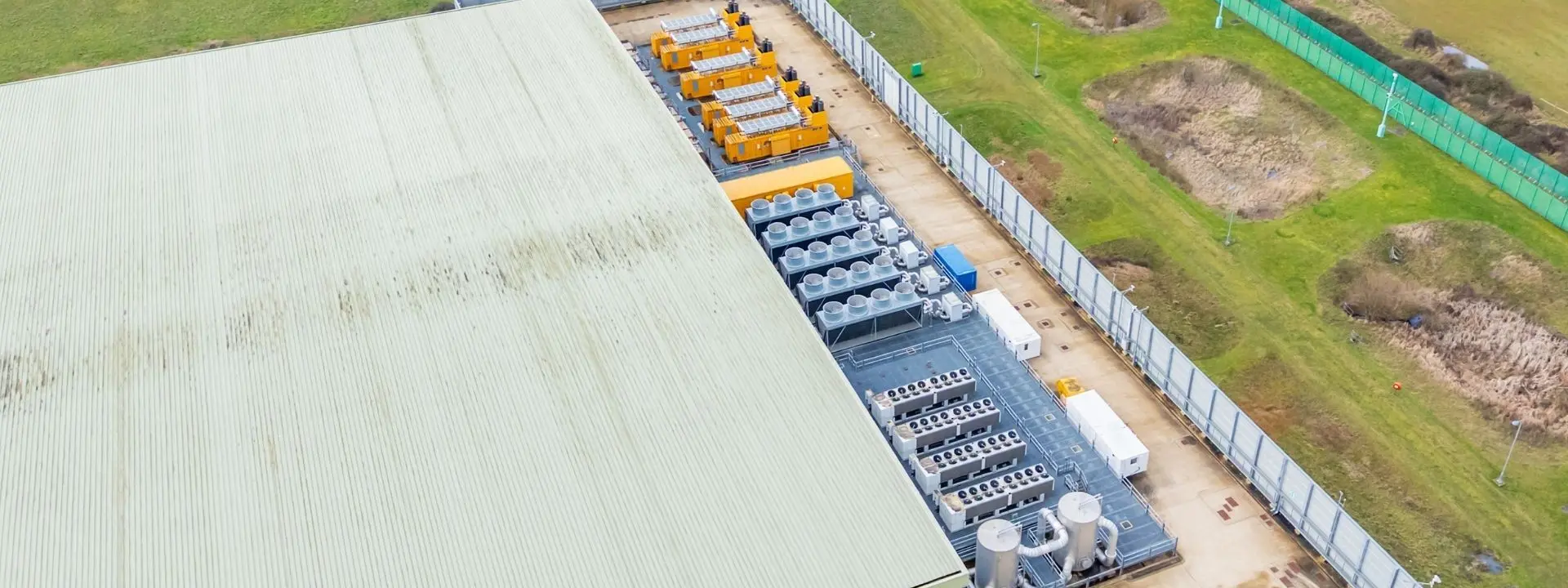
How spatial analysis supports data centre lifecycle planning
02 July 2026Steve Wallace is Director of Growth (Geomatics) at DM and a geospatial specialist with more than 30 years’ experience turning complex spatial data into actionable insights for clients across the utilities, infrastructure, defence and space sectors.
In this article:
The data centre market is currently experiencing rapid growth in the UK. However, this is becoming increasingly constrained due to limited grid and fibre capacity alongside restricted land availability. This makes finding the ideal data centre site more challenging.
Defining needs for site selection
Easily identifiable sites with unconstrained grid connections and straightforward fibre access are rapidly disappearing. This pressure, alongside intensified planning and environmental scrutiny, traditionally, data centre site selection has focused heavily on power availability and, to a lesser extent, water. While these remain primary constraints, they are only part of a much broader and more complex decision-making process.
When selecting a data centre site, developers are constantly working with trade-offs between infrastructure readiness, planning risk and commercial viability. For example, power capacity and connection timelines must be considered alongside land use classifications, ownership constraints and environmental sensitivities.
In practice, it is rarely possible to identify a ‘perfect’ site. Instead, success depends on the ability to evaluate and prioritise options based on their overall ability to deliver a successful project. Spatial analysis can help by enabling multi-criteria modelling and comparison across large or local geographies. Rather than assessing datasets in isolation, spatial tools bring together multiple constraints and opportunities into a single analytical framework.
This allows experts to identify, filter and rank sites based on factors such as ownership profile, accessibility to electricity and fibre connections, as well as any planning or environmental constraints.
Importantly, the selection criteria can be easily adapted to different types of data centres being developed. For example, hyperscale facilities may prioritise large, scalable sites with access to high-capacity power and opportunities for phased expansion. In contrast, edge or colocation deployments may place greater emphasis on proximity to demand centres and existing digital infrastructure.
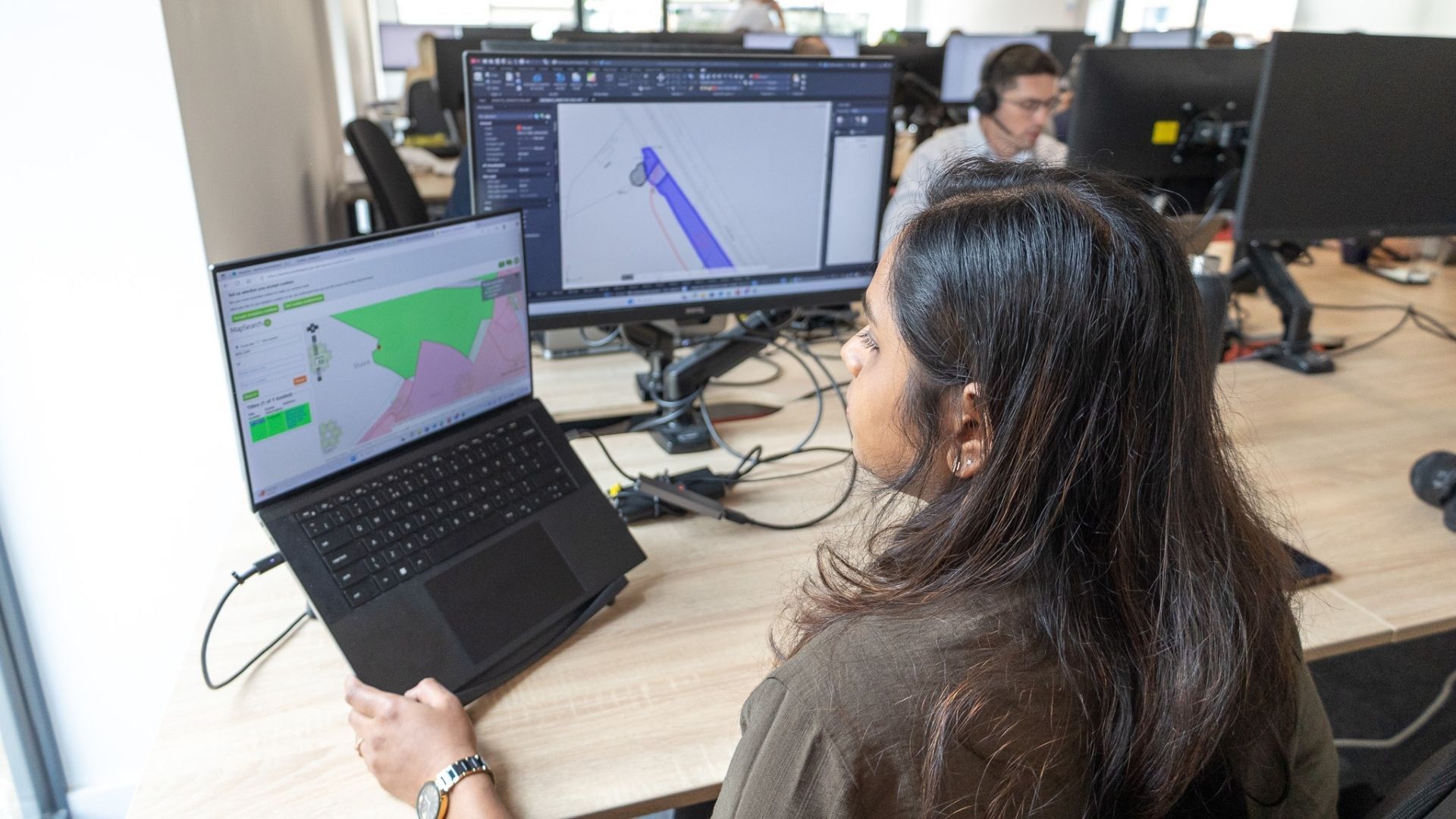
Benefits of adjacent experience in projects
Our Geomatics team has long supported utilities and infrastructure organisations on complex development challenges. This experience enables us to bring together fragmented datasets and develop a more complete picture of infrastructure constraints, including grid and fibre networks, using a combination of available data, industry insight and spatial modelling.
As a result, the site viability options are far more realistic and better than just relying on individual data sources alone.
How can spatial analysis support data centre site selection?
At different stages of data centre development, spatial analysis and Geomatics can support more robust, evidence-based planning.
How does this benefit developers?
The most immediate benefit is the ability to narrow down site options based on a clearly defined and evidence-based set of criteria. It also enables potential risks, such as land ownership complexity, planning restrictions or environmental constraints, to be identified much earlier in the process. These insights can then be factored into acquisition strategies, planning approaches and programme assumptions, reducing uncertainty and avoiding delays later on.
This is important because consent risk can be as impactful as technical feasibility. A site may appear suitable from an infrastructure perspective, but constraints related to planning policy, land assembly or environmental impact may ultimately determine whether development can proceed.
Capture. Analyse. Inform
As a fully integrated team, we can take spatial insights from the earliest stages of site identification through to detailed evaluation, drawing on local property, planning and environmental expertise. This ensures data-driven analysis is translated into practical, commercially informed decisions.
This is the main benefit we can offer compared to standalone GIS providers. While technical geospatial analysis is essential, it is only part of the solution. Delivering successful data centre developments requires the ability to interpret spatial data in the context of planning, infrastructure delivery and stakeholder considerations, enabling more confident and timely decision-making.
How does Geomatics support other lifecycle stages?
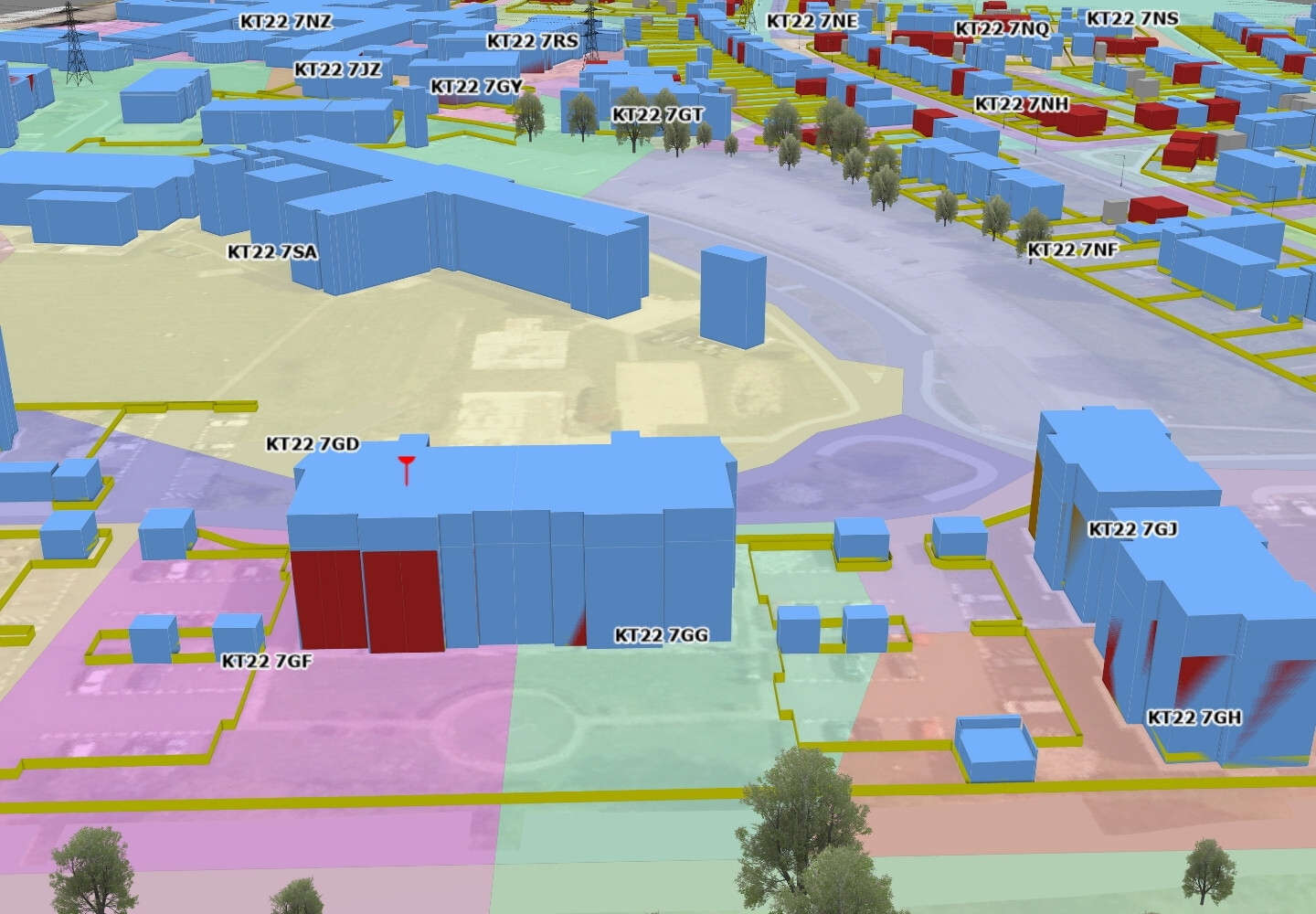
Beyond site selection, spatial analysis continues to add value throughout the development lifecycle.
For example, during early design stages, spatial data can inform decisions around site layout, access, utilities routing and development phasing. It can also support considerations around energy strategy and opportunities such as heat reuse or integration with surrounding infrastructure.
Similarly, spatial analysis can support network planning for distributed or edge data centres. For instance, telecoms operators can use location data, such as existing network assets, demand patterns and population density, to prioritise deployment locations and optimise coverage.
This data can be combined with detailed land surveying information, such as terrain models, drone imagery and boundary surveys. Together, this creates a much more accurate and comprehensive understanding of site conditions, enabling better-informed design decisions.
As a result, potential construction and programme risks can be identified early on in the process, allowing mitigation strategies to be built into the delivery plan. This supports improved construction efficiency, greater programme certainty and stronger long-term operational resilience.
In short, spatial analysis, when combined with sector expertise and integrated advisory support, plays a critical role in enabling successful data centre development. It moves decision-making beyond simple site identification, supporting a more informed, realistic and deliverable approach across the entire project lifecycle.
Specialist contact

Related articles

