
Enhancing digital infrastructure planning with OS NGD, LiDAR and GIS modelling
08 June 2026At a glance
Early-stage infrastructure planning relies on fragmented data and manual interpretation, slowing decision-making and limiting accuracy.
A DM-developed approach combining Ordnance Survey National Geographic Database (OS NGD), LiDAR and HMLR land ownership to enable accurate 3D modelling, visibility analysis and scenario testing through our GIS platform.
Faster, more accurate identification and comparison of viable infrastructure options earlier in the planning process.
Infrastructure planning typically depends on fragmented datasets and manual interpretation. This is combined with site visits that require land access and stakeholder coordination.
With the availability of Ordnance Survey’s National Geographic Database (OS NGD), we saw the potential to assess feasibility and options more effectively from the desktop.
Dalcour Maclaren’s role:
- Identified the opportunity to apply OS NGD to infrastructure planning in a new way.
- Brought together our Geomatics and Digital Infrastructure teams to explore practical applications.
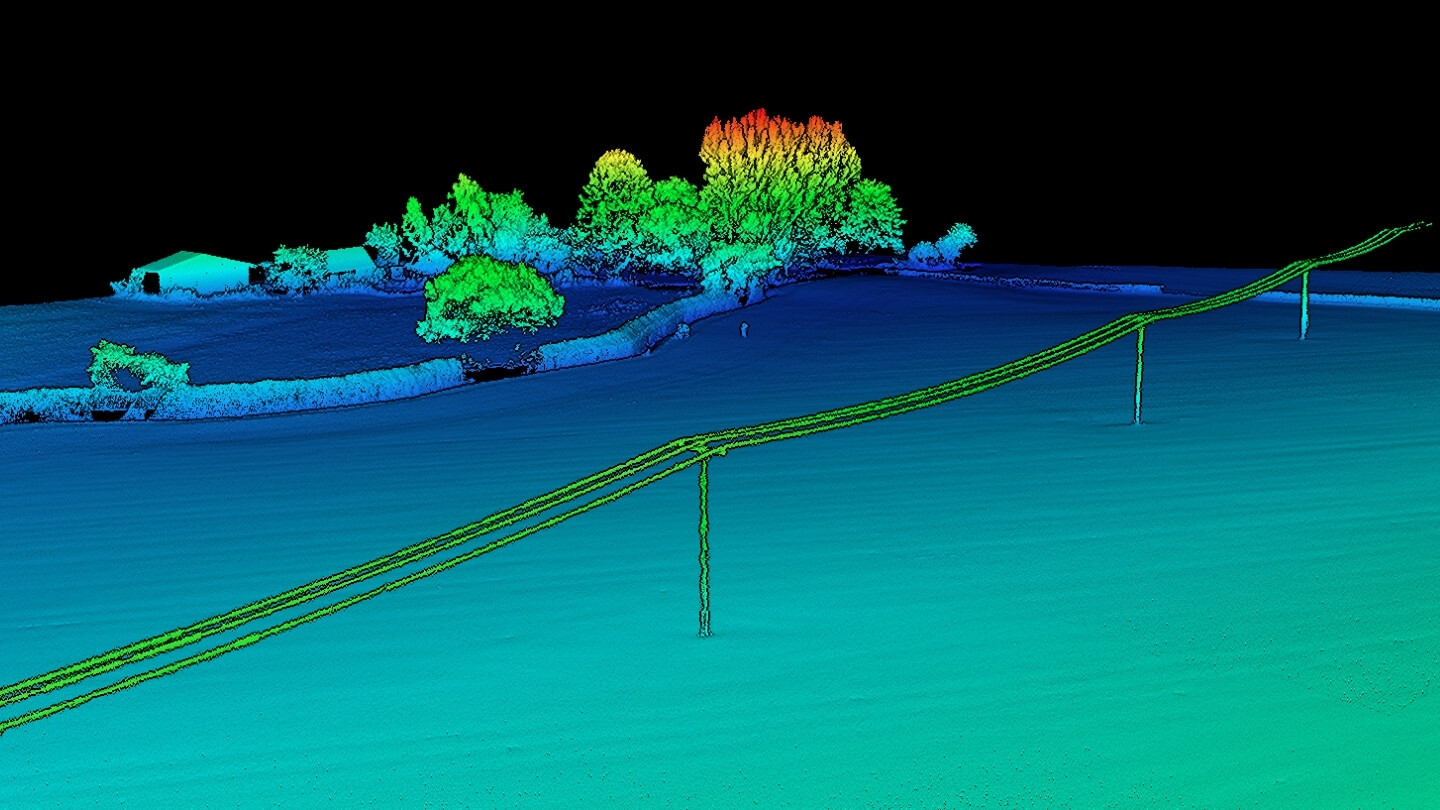
- Combined OS NGD with LiDAR and HMLR land ownership to create a unified 3D desktop model for analysis.
- Enabled visibility, line-of-sight and scenario testing to be carried out earlier in the planning process.
THE DM DIFFERENCE
We challenge
The current approach to early-stage infrastructure planning involves separate data sources, alongside multiple site visits to confirm key constraints.
We saw an opportunity to transform this with the Ordnance Survey National Geographic Database. By combining the OS NGD with other spatial datasets, we’ve created a more structured desktop analysis. This allows options to be identified, tested and compared earlier in the process. Which in turn shifts decision-making from validating options on the ground to understanding them before fieldwork begins.
We innovate
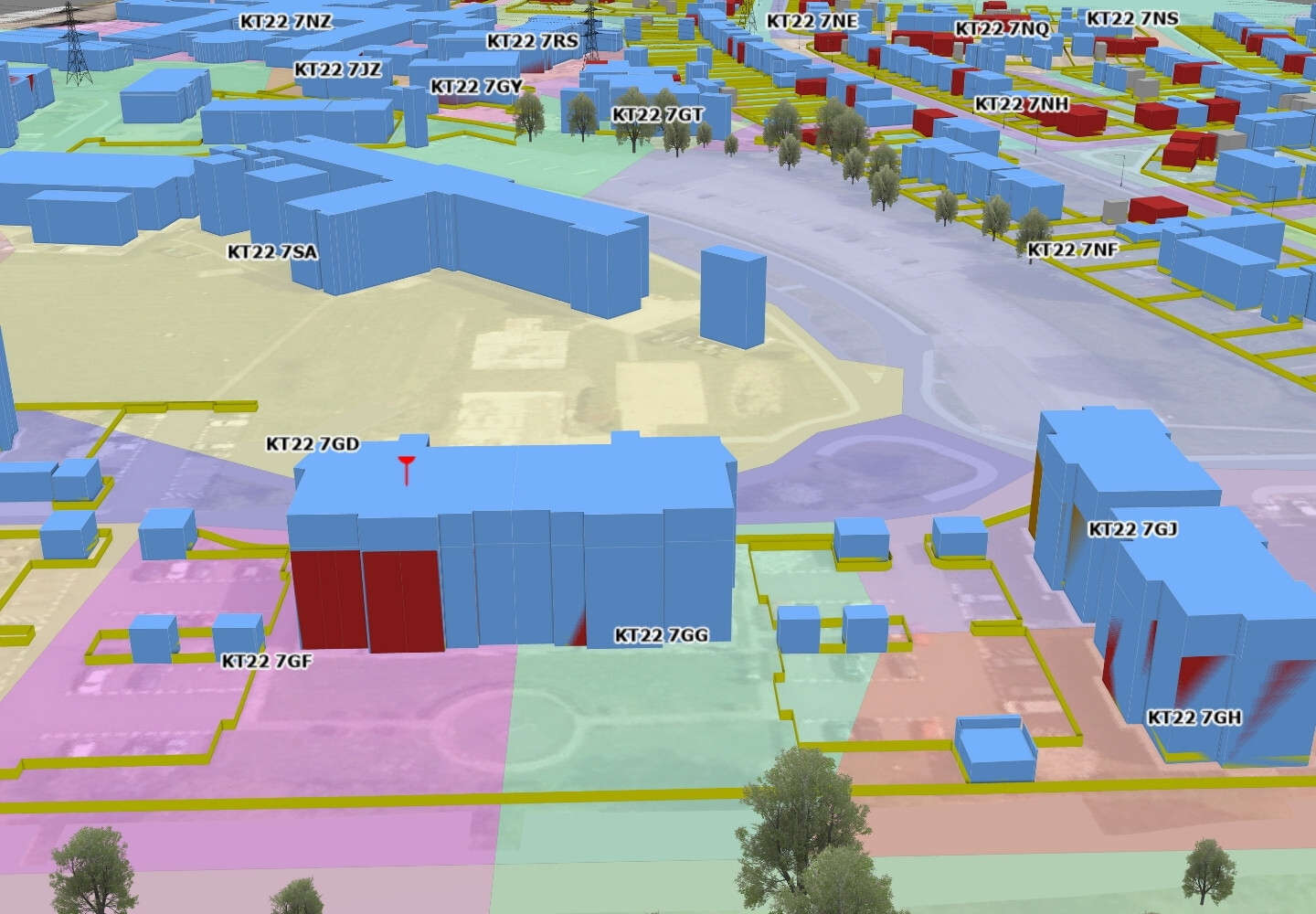
To enable the shift, we’ve combined OS NGD with LiDAR and HMLR land ownership. This brings multiple datasets into a single 3D model for infrastructure planning.
Instead of working across separate maps, spreadsheets and datasets, we can give clients a more accurate view of spatial information. This removes the need for manual alignment.
Within the model, we can:
- Identify viable sites directly from desktop analysis
- Compare multiple location options before field visits
- Assess visibility and line of sight from real-world viewpoints
- Model coverage and signal behaviour across environments
- Test mitigation scenarios such as repositioning or screening
A practical example of this is line-of-sight (viewshed) analysis, i.e. an observer point is set at a defined height to show what’s visible and what’s obstructed from that location. Visibility can now be tested and understood at the desktop stage. Removing the need for site visits.
We care
By bringing this level of information together, the potential real-world impact of infrastructure proposals is clear. This desktop line-of-sight analysis and scenario testing allows options to be developed earlier.
For our clients, this reduces programme pressure and delays linked to access constraints and late-stage changes. It also strengthens confidence in their chosen approaches.
For communities and landowners, it reduces disruption during the planning process by limiting site visits, road closures and other constraints.
And crucially, it supports clearer engagement and consultation, helping discussions focus on realistic options that work for everyone.
From spatial data to the future of infrastructure
By developing this approach, we’re changing how complex infrastructure is understood and delivered. We can give clients clarity earlier, so decisions can be made with greater consistency, accuracy and confidence.
And this is just the start, as we continue to explore how it can help solve the evolving challenges of infrastructure.
Specialist contact


